Hamilton Illustrated Auction Sale Catalogue - The Remaining Contents, 1919, M124/5/17: Page 03
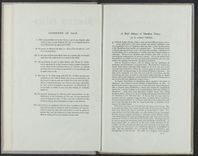
Illustrated auction catalogue of the sale of the contents of Hamilton Palace, the property of the Trustees of the Late Duke of Hamilton by Messrs Christie, Manson and Woods in 1919
Transcription
The Remaining Contents of THE PALACE
A Brief History of Hamilton Palace.
By H. AVRAY TIPPING.
CASTLE, Palace, House, Palace—such are the different names successively attributed to the often rebuilt and altered habitation near the Lanarkshire town of Hamilton that has been a chief dwelling-place of the Hamiltons from medieval to present days. Vast additions made a century ago transformed it into the huge pile needing a stateliness of householding and a multiplicity of retinue that have become things of yesterday. Moreover, its situation and condition join with its size in procuring its condemnation by general consent. It is in the midst of the Lanarkshire coal field, and the numerous and proximate pits not only destroy its amenity, but actually threaten its structure.
And so Hamilton Palace, with its history and its traditions, its splendour and its treasures, is to pass away. The first blow, indeed, was struck thirty-seven years ago when masses of its most rare and costly contents were dispersed, causing the virtuoso pulse to throb lustily and adding a still unforgotten page to the annals of Christie’s saleroom. Yet how much remained over, how fine were still the decorations and the furnishings has been revealed by last week’s important sales in King’s Street, and by this Catalogue, which includes the splendid decorations of the seventeenth and eighteenth century rooms.
To Walter FitzGilbert de Hamiltone, Bruce granted “ the lands of Machane “ soon after he won the Battle of Bannockburn in 1314. In the fifteenth century King James II of Scotland made James Hamilton, ifith in descent from FitzWalter, a baron, and erected his Lanarkshire lands into “ one free lordship to be denominated in future the lordship of Hamilton.” This first Lord Hamilton wedded James II's eldest daughter, Mary, widow to an Earl of Arran, and carrying the Island and the Earldom to her Hamilton son. It was as Earl of Arran that her grandson held the regency during the days of Queen Mary’s childhood. During that period Henri II. of France made him Duke of Chatelherault, and it was probably then that his home at the edge of Hamilton town came to be called Palace.
Evil times, however, now fell both upon the house and its owner. The house was more than once sacked and its lord exiled during the civil wars that never ceased till Mary’s head fell at Fotheringay in 1587. Two years earlier, Lord John Hamilton—his elder brother having long before lost his reason—entered Scotland in strength, seized Stirling Castle, where King James VII. was, and imposed upon him forgiveness and the restoration of lands for himself and his fellow-exiles. Thereupon he set to work to repair the devastated estate, and rebuilt the ruined house. A stone, dated 1591, is preserved as the only visible remnant of the “ Castle “ he then erected, and where he often entertained the King, who had become his firm friend and created him Marquess of Hamilton in 1599. His two grandsons were successively Dukes of Hamilton, and died fighting for the Stuarts. The elder one’s daughter Anne became