Pathfinder Pack on Hamilton Inventories : 1919 Christie's Auction Sale Catalogues
VHP 000-000-000-875-L
Hamilton Palace Hamilton, Lanarkshire, Scotland - The Remaining Contents of The Palace. On Wednesday,November 12, 1919 And Two Following Days - Illustrated Catalogue
Fine Historical Portraits and Ancient and Modern Pictures - The Property of The Trustees of His Grace the Late Duke of Hamilton, On Thursday, November 6, 1919 and Following Day - Illustrated Catalogue
Fine Historical Portraits and Ancient and Modern Pictures - The Property of The Trustees of His Grace the Late Duke of Hamilton, On Thursday, November 6, 1919 and Following Day
Old English Furniture and Objects of Art - The Property of The Trustees of His Grace the Late Duke of Hamilton, on Wednesday, November 5,1919
Fine English and Foreign Silver - The Property of The Trustees of His Grace the Late Duke of Hamilton , on Tuesday, November 4,1919
Fine English and Foreign Silver - The Property of The Trustees of His Grace the Late Duke of Hamilton , on Tuesday, November 4,1919 - Illustrated Catalogue
These 1919 Christie's auction sale catalogues are the last record of the contents of Hamilton Palace before its subsequent demolition. The contents were sold in London by Christie's auction house in a series of sales held between November 4th and 6th 1919 (Silver, Furniture and Painting ). A sale of Remaining Contents took place at Hamilton Palace, Lanark the following week on the 14th November.
Illustrated and un-illustrated versions of the sale catalogues were produced and in this series from the Hamilton Archives illustrated volumes exist for the sales of paintings and the remaining contents. An illustrated catalogue of silver is included from the collections of the National Museums of Scotland. The illustrated catalogue of the Remaining Contents of the Palace is prefaced by H.Avray Tipping's A Brief History of Hamilton Palace. Tipping, the respected architectural historian, worked as Architectural Editor of Country Life from 1907 until 1933.
The Remaining Contents included the very rooms of the palace itself, complete interiors of some of the most important 17th and 18th century rooms and the main stairways. These rooms were sold and removed. Some were eventually sold on or donated to Museum collections world wide. The Morning Room (earlier called the Drawing Room) dating from the baroque building stage of the Palace, was designed by James Smith for William, 3rd Duke of Hamilton (1634-94) and his wife Anne Duchess of Hamilton (1632-1716).Its oak paneling, carvings and black marble fireplace were built between 1693 and about 1697 and completed in 1701.The entire room interior was sold via the dealers Robertsons ltd of Knightsbridge and P.W.French and Co. Inc. of New York to William Randolph Hearst. The Hearst Foundation in turn donated it to New York's Metropolitan Museum of Art in 1956 who, in a circuitous manner, gifted it back to Scotland and the National Museums of Scotland in 1992. Although the room is unlikely to be reconstructed in the near future by the National Museums of Scotland, it is hoped that as part of this project a digital reconstructions may be possible using images that record the surviving parts of the room and original photographs, for example, those published by H.Avray Tipping in Country Life in 1919.
The catalogue of Fine Historical Portraits and Ancient and Modern Pictures enables a last and final glimpse of paintings in the Hamilton collections, paintings that have been listed exhaustively in 17th, 18th and 19th century inventories. For example the portrait of William Feilding, 1st Earl of Denbigh (c1592-1643 )finally left the Hamilton collections in 1919. It is now in the National Gallery, London. It appears in four out the seven 17th century inventories included in this prototype and in every 18th and 19th century inventory. One of the most important Hamilton paintings, Daniel in the Lions Den by Rubens stayed in the Hamilton Collections until the 1919 sale and can be traced through the archives in a similar way. It was eventually acquired by the National Gallery of Art in Washington in 1965. Further information about the 1919 auction sales of the Hamilton collections and contemporary reaction to it is found on the Virtual Hamilton Palace Site.
The attributions given to some paintings in the catalogue, in some instances, left a great deal to be desired and some paintings leave the Hamilton collections virtually in disguise. For example, the remarkable painting of the 3rd Marquis of Hamilton by Daniel Mytens of 1623 was acquired by Colin Agnew in 1919 and donated by him to the National Gallery as such. It was catalogued in the sale (lot 17) as a Portrait of Lord John Hamilton, 1st Marquis of Hamilton and attributed to Marcus Gheeraerts. Despite this these catalogues of the 1919 sales of the Hamilton Collection are of significance as they afford a final glimpse of the Palace and its contents, the last inventories of an archive that spans three hundred years.
Hamilton Palace Hamilton, Lanarkshire, Scotland - The Remaining Contents of The Palace. On Wednesday,November 12, 1919 And Two Following Days - Illustrated Catalogue
-
-
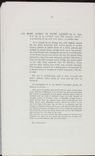
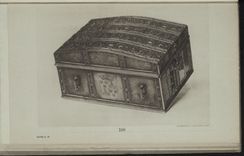
108 Mary Queen of Scots Casket - Now at NMS - Work In Progress
Literal: 14 108 MARY QUEEN OF SCOTS’ CASKET—4¼ in. high, 8 in. by 5 in.—French, early 16th Century—mark, a crowned fleur-de lys with cross below—in leather case etc.
Modernised:
-
-
-
Silver illustrated: Illus. Mary Queen of Scots Casket - Now at NMS - Work in Progress
Literal:
Modernised:
-
-
-
Silver illustrated: 109 Napoleonic Tea Service - Work In Progress - Now in NMS and Louvre Collections
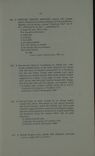
Literal: 15 109 A FRENCH EMPIRE SERVICE, chased with winged figures, Napoleonic emblems, festoons of fruit and flowers, dolphins and gryphons—signed “BIENNAIS ORFRE DE S. MrÉ L'EMPEREUR ET ROI “—consisting of— A large tea-urn-33 in. high Two tea-pots and stands A coffee-pot A milk-jug A tea-caddy A cut-glass canister Two oval dishes, on stands A tea-infuser and two strainers Two butter-knives In case (Gross weight without glass, 785 oz.)
Modernised:
-
-
-