Pathfinder Pack on Hamilton Inventories : 1882 Sale of the Contents of Hamilton Palace
VHP 000-000-000-765-L
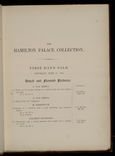
Christies' Catalogue of the 1882 Sale of the Contents of Hamilton Palace.
Illustrated Priced Catalogue of the Sale of the Contents of Hamilton Palace.
Illustrated London News : Special edition devoted to the 1882 Sale of the contents of Hamilton Palace
The dispersal of the heart of the Hamilton Collections took place as a result of major sales in 1882 and 1919. These were followed in the 1920s by the demolition of Hamilton Palace itself. Today the contents of the house from those sales are to be found in major museum collections scattered throughout the world. The sale catalogues give a snapshot of the house and its contents at this date just as any earlier Hamilton inventory does. There are three publications that relate to the 1882 sale, The Illustrated London News special edition devoted to the sale, the Christies' sale Catalogue and the Illustrated Priced Catalogue which lists prices paid and names of buyers.
The buyers list includes those dealers acting for and including some of the most important European and American Collectors of the day. It is a dazzling array that includes some of the wealthiest people in the world at that time, for example Baron Ferdinand Rothschild (1839-98), William Kassim Vanderbilt and Henry Clay Frick (1849-1919). Rothschild, whose legendry fortune was amassed through banking, owned Waddesdon Manor, a French chateau, built in the Renaissance style. Vanderbilt was son of William Henry (1821-85) made the first great American industrial fortune from shipping and the development of the American railroad system. Henry Clay Frick's fortune from coal and steel was spent in amassing his magnificent collection of paintings, furniture and decorative art which he bequeathed to the American nation. These collections were greatly enhanced by the purchase of French furniture made by Jean-Henri Riesener for Queen Marie Antionette of France via various dealers and collectors at the 1882 Hamilton sale. For example Samuel Wertheimer bought furniture by Riesener on behalf of Ferdinand Rothschild and his sister Alice (Cat 303, page 45). The dealers Davis and Wertheimer bought on behalf of Vanderbilt the black lacquer secretaire and commode made by Riesener (page 163, cat 1297 and cat 1298) which are now in the Metropolitan Museum of Art New York. Henry Clay Frick bought from the estate of the American J. Pierpoint Morgan whose collection came from Sir Joseph Duveen. Duveen had earlier united a secretaire and commode made by Riesener for Queen Marie Antoinette of France bought by two separate dealers (Boone and Stettiner) at the 1882 Hamilton sale (see Page 43, 44, and 45).
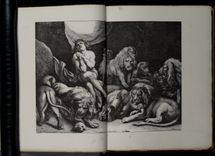
The painting Daniel in the Lions Den by Rubens was sold for £5,145 but was bought back by the 12th Duke of Hamilton three years later. It was sold again in the 1919 Hamilton Palace Sale and in 1965 was acquired by the National Gallery of Art Washington. Lesser known pictures such as the Van Dyck portrait of the Duchess of Lennox, last glimpsed in the Hamilton collection in 1882 (Page 11, cat 31) are now in American collections, in this case the North Carolina Museum of Art, Raleigh (via the Theodore Webb gift). The Van Steenwyck painting Lot and His Family (Page 141, cat 1057) was bought by M.H.Arnot and is now part of the permanent collections of the Arnot Art Museum, Elmira, New York. The catalogue also, intriguingly, lists paintings that have disappeared. For example, this is the last recording of the full length portrait of King Gustavus Adolphus, King of Sweden by Miereveldt. Its present whereabouts remains a mystery today.
Catalogue of the 1882 sale of the contents of Hamilton Palace.
Work in Progress
Illustrated London News : Special edition devoted to the 1882 Sale of the contents of Hamilton Palace
Inventory
Work in Progress
Illustrated priced catalogue of the sale of the contents of Hamilton Palace 1882
-
-
- Lady Mary Villiers by Sir Anthony Van Dyck
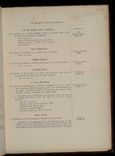
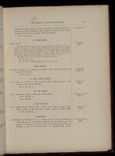
Literal: VAN DYCK. 31 PORTRAITS OF THE DUCHESS OF RICHMOND AND HER SON. The former has the appearance of being twenty-five years of age, of a fair complexion, and auburn hair arranged in curls and decked with flowers. She is seen in nearly a front view, attired in a white satin robe and a brown fur tippet, standing with the left hand extended, and the right placed on her bodice.. PURCHASED BY Duncan. £2047 10s
Modernised:
-
-
-
31 Continued: Lady Mary Villiers by Sir Anthony Van Dyck
Literal: Her son, a boy of about five years old, is represented in the character of Cupid, standing by his mother, holding an arrow in his hand. A portion of a building and some sky form the background. This is a Clear and beautiful production. 78 in. by 51 in. See Smith's "Catalogue Raisonné," Supplement.
Modernised: -
Charles 1 by Remigius Van Leemput
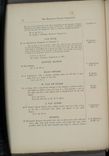
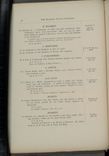
Literal: VAN DYCK. 32 AN EQUESTRIAN PORTRAIT OF CHARLES I. The monarch is seen in nearly a front view, with his head uncovered, and his dark hair flowing on a rich lace collar which encircles the neck and forms a fine relief to the brilliant suit of armour in winch he is clad. His right hand grasps a baton poised on the housings of. the saddle; the beautiful grey charger on which he is mounted is viewed in a fore-shortened position. 6 ft. 7 in. by 4 ft. See Smith's Catalogue, Supplement, p. 374. PURCHASED BY H. Durlacher. £997 10s
Modernised:
-
-
-
Heinrich Knoblauch
Literal: H. HOLBEIN. 54 PORTRAIT OF A GENTLEMAN, in white and gold embroidered shirt, embroidered brown dress, brown-black cloak and cap, his right hand holding the pommel of his sword; view of a lake with buildings in the background. A shield of arms on the back inscribed "Henrich, Knobelauch-seineses alters xxv., felicitas vostennerin sein gemabel qres alters xxv., mcccccxxxix" PURCHASED BY Duncan £220 10s
Modernised:
-
-
-
-
Gustavus Adolphus, King of Sweden
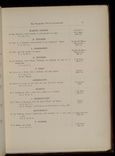
Literal: MIREVELDT. 79 GUSTAVUS ADOLPHUS, KING OF SWEDEN's, whole length. 6 ft. 9 in. by 3 ft. 4 in PURCHASED BY F. Davis. £320 5s.
Modernised: -
Daniel in the Lions Den by Sir Peter Paul Rubens
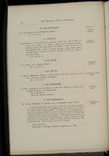
Literal: RUBENS. 80 DANIEL IN THE DEN OF LIONS.. The Prophet is represented sitting naked in the midd1 of the den, his hands clasped, and his countenance directed upward with an expression of earnest prayer. Nine lions are prowling around him. Engraved by Blooteling, Van der Leuw, and Lamb, and in mezzotint bv J. Ward. There is also an etching of it by Street, extremely rare. This is one of the few great pictures by Rubens which we know with certainty to have been entirely executed by his own hand. Rubens says this explicitly in an Italian letter to Sir Dudley Carleton, which Mr. Carpenter has printed in his Pictorial Notices, p. 140. This picture was presented by Sir Dudley Carleton to Charles I., and is inserted in the printed catalogue of his collection at page 87. No. 14. Done by } Item. A piece of Daniel in the lion's den, with lions about him. Sir Peter } given by the deceased Lord Dorchester to the king, so Paul Rubens} big as the life, in a black gilded frame. 7 ft. 6 in. by 10 ft. 10 in. See Smith's "Catalogue Raisonné" vol. 11, p. 162. See Dr. Waagen, "Art Treasures in Great Britain," vol. 3, p. 294. PURCHASED BY Duncan £5,145.
Modernised:
-