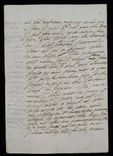
Pathfinder Pack on Hamilton Inventories : 1635-1639 Hamilton - Feilding Correspondence
VHP 000-000-000-717-L
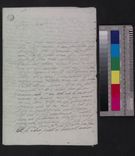
The Letters of James, third Marquis of Hamilton and Basil, Viscount Feilding on the subject of collecting art in Venice 1635-1639
This collection of letters consists of correspondence between James, 3rd Marquis, later 1st Duke of Hamilton and his brother-in-law Basil, Viscount Feilding, English Ambassador in Venice. Some 160 letters survive from Feilding to Hamilton and are now in the National Archives of Scotland. The correspondence documents the acquisition of a remarkable collection of about four hundred Venetian paintings in Venice by Feilding on behalf of Hamilton between Autumn 1635 and the summer of 1638. At this time the collection surpassed the rival collections of paintings held by Charles 1 or any of the other earlier courtier collectors such as the 1st Duke of Buckingham or (later) Lord Arundel. Fifty of these paintings are still together and make up the heart of the Venetian holdings of the Kunsthistorisches Museum, Vienna. They were acquired via the Archduke Leopold Wilhelm in Brussels two years after Hamilton's execution in 1649 and following the Royalist defeat in the English Civil War.
The letters discuss the provenance of paintings secured from three legendary Venetian collections, formed in the 16th Century, belonging at that date to Bartolomeo della Nave, Procurator Priuli and Nicolo Renieri. The most significant coup was the acquisition of 200 paintings from the collection of Bartolomeo della Nave, listed in hamilton Inventory M4/10 (Pathfinder M4/10)
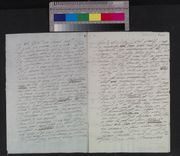
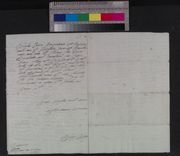
The correspondence is devoted to remarkably assertive and confident discussions about the authentication of pictures (e.g. GD406/9575, GD 9580, GD9469, p5). Hamilton's correspondence is unclear as to whether the pictures were intended for himself or the King (GD406/9469, p5 top and bottom) but at least two other Hamilton inventories written before 1643 (Inventory M4/21) (Inventory M4/22), show that they remained in Hamilton's possession until the beginning of the Civil War in the 1640s.
The correspondence also refers to rivalry between various competing parties for the Della Nave collection - the Spanish Ambassador, acting for the Spanish court, Mr William Petty acting on behalf of Lord Arundel (GD406/9469, p5). Hamilton's fiercest competition was with Petty whilst attempting to purchase Raphael's picture of St Margaret, part of the collection formed in the 16th Century, owned by Procurator Priuli and unaffected by 17th Century taste. The competition invoked some scorn by Feilding about Petty, whom he otherwise thought a decent and honorable man (GD406/1/9493, p5). In a later letter Feilding described to Hamilton the accidental death of the frail Priuli just after the sale. (GD406/1/9494, p3)
The acquisition of these Venetian paintings reflects Feilding's energy and initiative. Remarkably, Feilding considered, in total, ten collections or paintings from collections in the short space of 30 months. Within 5 years of their purchase, the collection was dispersed and Hamilton and Feilding found themselves on different sides of the Civil War, Feilding witnessing the execution of his brother- in - law on the 9th March 1649, after the loss of the Royalist cause.
- Ernest Vegelin Van Claerbergen, * David Teniers and the Theatre of Painting*, The Courtauld Institute of Art Gallery, 2006,pp14.
- Jonathan Brown, Kings and Connoisseurs - Collecting Art in Seventeenth Century Europe, Yale University Press, 1995.p.49
- Paul Shakeshaft, Burlington Magazine, "To Much Bewiched with Thoes intysing things": The letters of James, Third Marquis of Hamilton and Basil, Viscount Feilding, concerning Collecting in Venice 1635-1639", February 1986, cxxviii, 995, p78+114-134
-
-
-
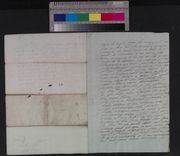
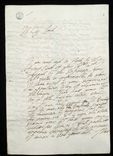
Reference to St Margaret and the Dragon by Giulio Romano and Raphael
Literal: Modernised: Pruili's Santa Marguerita of Raphael
-
-
-
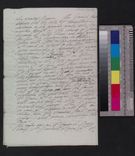
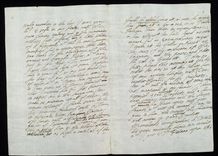
Reference to St Margaret and the Dragon by Giulio Romano and Raphae
Literal:
Modernised: The pictures I shall remove to my house this next week, at the beginning whereof the money will be ready. The names of the masters being those: A Saint Margaret of Raphael... -
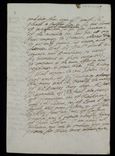
Reference to Young woman at Her Toilet by Giovanni Bellini
Literal:
Modernised: ...and a ritratto, a half figure of Giovanni Bellini’s.
-